Greyhawk Online

About Greyhawk Online

This author has not yet filled in any details.
So far Greyhawk Online has created 353 blog entries.

Daoud, Hero-Deity Warlock Patron

2025-10-16T19:04:55-04:00September 2nd, 2020|

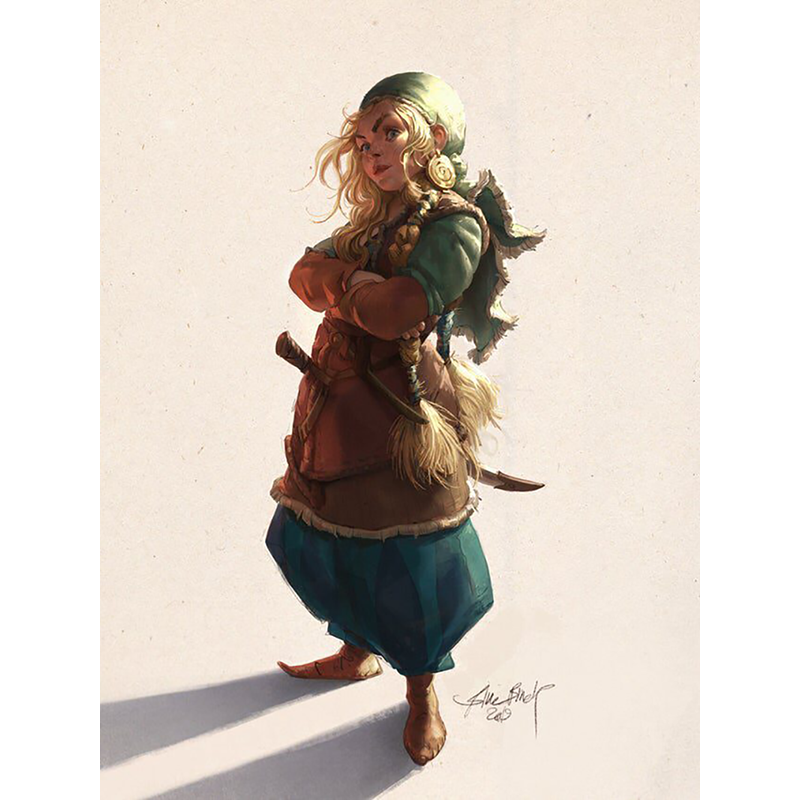
Daoud, Hero-Deity Warlock Patron This Hero-Deity patron is by far the most restrictive and powerful of all the one's I have done so far. Daoud charges a steep price for a warlock to follow the Path of the Seeker. I felt that this offset the powers of the warlocks granted abilities. Originally published on the Greyhawk Companion blog, by William Dvorak.
Comments Off on Daoud, Hero-Deity Warlock Patron

Charmalaine, Hero-Deity Warlock Patron

2025-10-16T19:04:55-04:00August 30th, 2020|

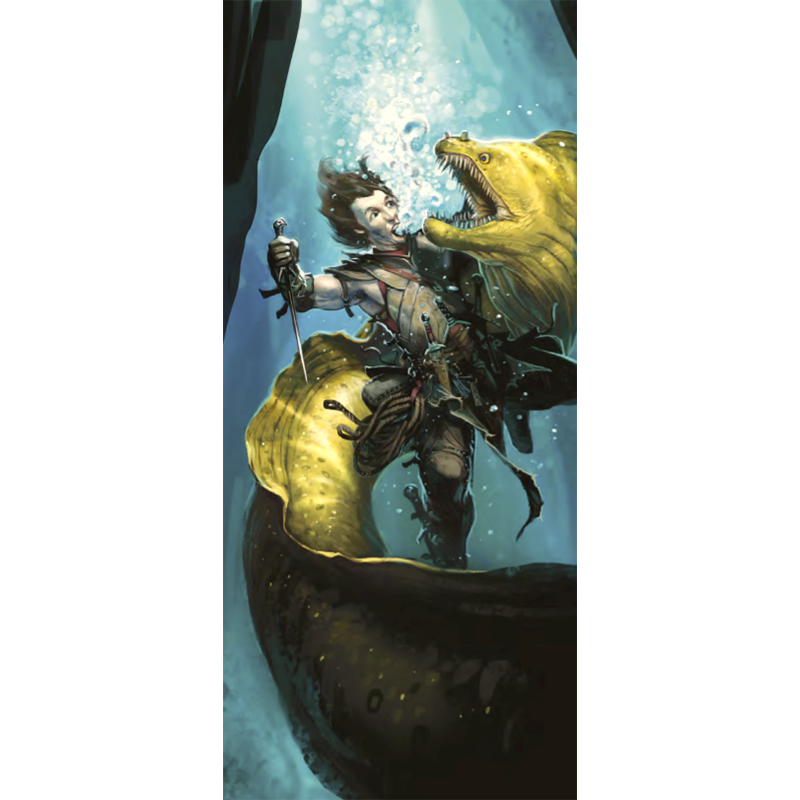
Charmalaine, Hero-Deity Warlock Patron Art by Blue Birdy Originally published on the Greyhawk Companion blog, by William Dvorak.
Comments Off on Charmalaine, Hero-Deity Warlock Patron

Murlynd, Hero-Deity Warlock Patron

2025-10-16T19:05:00-04:00August 19th, 2020|

Murlynd, Hero-Deity Warlock Patron Art by Michael Dubisch Originally published on the Greyhawk Companion blog, by William Dvorak.

Comments Off on Murlynd, Hero-Deity Warlock Patron

Thoughts on Lowdown at Highport

2025-10-16T19:05:01-04:00August 14th, 2020|

Thoughts on Lowdown at Highport Thoughts on Lowdown at Highport “Remembrance of things past is not necessarily the remembrance of things as they were.” ― Marcel Proust Needless to say, spoilers ahead! What did the world need during Wotc’s 4th edition era? More AD&D. More Greyhawk and instalments of the epic Slavers series, specifically. Chris Perkins obviously thought so. It was he who contacted Skip Williams to write a prequel to the A-series, so I assume the resulting compilation was his idea. Against the Slave Lords was published in June of 2013; oddly, that was the same month that WotC released a further finale to A4 In the Dungeons of the Slave Lords in Dungeon magazine #215 titled The Last Slave Lord. I say oddly, because I can’t help but think that the compilation could have only been made better by its inclusion, not to mention that of what followed in December in #221: Lowdown at Highport. (Sadly, that was also the final issue of Dungeon magazine, as well.) Why weren’t they included? I don’t know. Maybe they thought the compilation was long enough as published. Maybe they thought a longer compilation would have been too expensive. Maybe they wanted to sell more magazines. No matter, for whatever reason, they were not included, and I suspect that there are a lot of people out there who never knew that these adventures even exist. How could they, many of them having migrated to Pathfinder after the release of 4th edition? Until now, that is…. In any event, Lowdown at Highport follows A0 Danger at Darkshelf Quarry and precedes A1 Slave Pits of the Undercity. They dovetail ... read more!

Comments Off on Thoughts on Lowdown at Highport

A Fifth of Greyhawk Part 6 – Dungeon Master’s Notes on “Housecleaning.”

2022-03-01T13:56:59-05:00August 13th, 2020|

A Fifth of Greyhawk Part 6 - Dungeon Master's Notes on "Housecleaning." As you read this, Oerth Journal #33 is out, and along with it, my Fifth Edition Greyhawk Adventure, “Housecleaning.” If you plan to play it, please stop reading. SPOILERS BELOW. If you plan to run the adventure, here are some notes. The idea behind Housecleaning was that often there is a Boss Bad Guy at the end of an adventure that the players don’t have any connection to because they only encounter them when it’s time to roll for initiative. He’s really just a pile of Hit Points at that point. I thought of this adventure as a way for the PCs to gradually learn the backstory of the victim (Faedra) and the evil Mahone throughout the adventure so when they finally met them both, they were motivated to fight because the adventure dribbles out the story while the PCs plow through Moonglade Spire. The main Greyhawk element I wanted to get across was the concept of the Great Kingdom once ruling over most of the continent. So all the heraldry and the talking Pearl of Power (who works great if played like C-3PO) and the abundance of mundane magic items were all meant to sell the idea of this past golden age. I hate reading texts to PCs for lore purposes so I tried to think of as many ways to make it come alive as I could. The Harry Potter-esque Magic Paintings, the talking ancient Pearl full of concern, the books on the shelves, all of it is there to avoid ever having to tell the players “Hundreds of years ... read more!

Keoghtom, Hero-Deity Warlock Patron

2022-03-03T16:48:37-05:00August 10th, 2020|

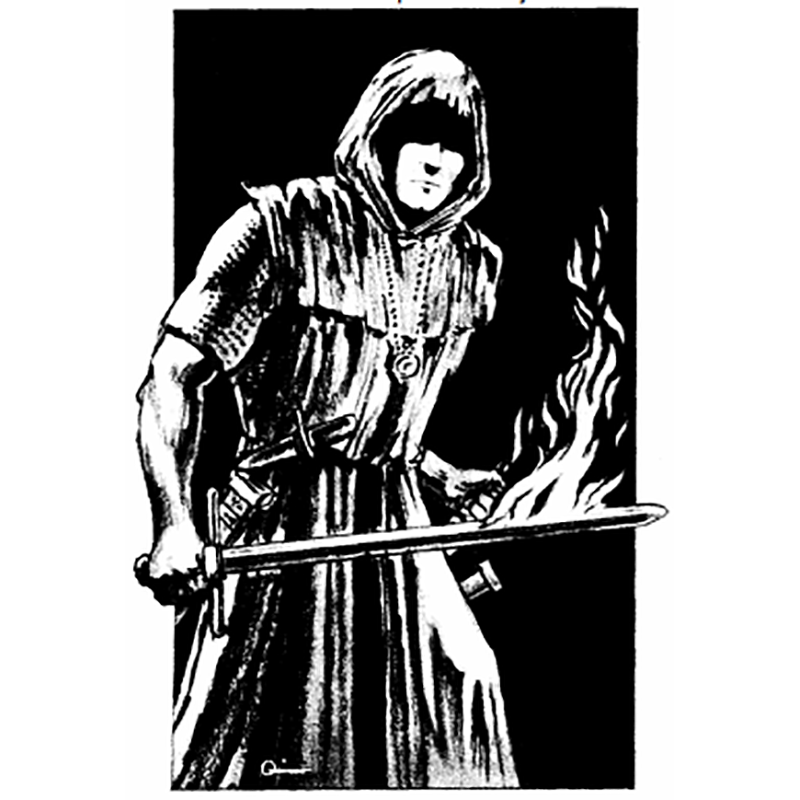
Keoghtom, Hero-Deity Warlock Patron 3rd in my conversion of the Hero-Gods of Greyhawk into warlock patrons is Keoghtom. I thought that the key area to focus on was Keoghtom’s thirst for knowledge, which would be essential in any person deemed worthy enough to be a warlock for the hero-god. Looking at Gygax’s writings on Keoghtom, I also gave his warlocks access to medium armor and martial weapons to emulate the hero-gods proficiency with every weapon and type of armor. The only notable ability of Keoghtom’s I decided not to have his warlocks emulate was the hero-gods magic resistance. I felt that this warlock already had more than enough diversity to it and left that out. Keoghtom illustration by Harry Quinn  

Theocracy of Dimre, A Brief History, Part 2

2022-03-03T16:54:14-05:00August 10th, 2020|

Theocracy of Dimre, A Brief History, Part 2 Again I'd like to thank Tom Harrison, Erik Mona, and many authors of the Living Greyhawk community for the inspiration for my articles on Dimre. ​Now a full-fledged theocracy, Dimre under the direction of Canon Sagmered went about strengthening itself internally and externally. The first order of business being the reorganizing of the Militias. Since it's founding as an Earldom Dimre has prided itself on its militias. The militias, situated in a chaotic land full of bandits, were initially formed to protect the silver mines in the Rift Canyon. As the then province grew and villages turned into towns and a few small cities, protection of the populace became an issue. With a large percentage of the growing population being followers of Pholtus, many of the troops that were recruited into the militias were used to a lifestyle of laws and order. Many of the visiting dignitaries from Rel Mord would often remark how orderly and disciplined the Militias were. With Dimre changing from being a province of a vast kingdom to an independent theocracy, there was some culling of the officer core. Fortunately, those officers stripped of their rank, and commissions were not the field commanders. A new code of ethics was introduced, and those that felt they could not adhere to the new standers could leave without incident. The regime change did not affect the rank and file much, which was vital in keeping out the bandits and later in its war against Iuz. As it became apparent that Nyrond had no intention of retaliating, Canon Sagmered shifted his focus to the kingdom's western ... read more!

Johydee Hero-deity Warlock Patron

2022-03-03T16:55:41-05:00August 8th, 2020|

Johydee Hero-deity Warlock Patron ​Johydee, the 2nd in my series of turning the Hero-deities into warlock patrons for 5th edition. One thing I feel that is equally important for a warlock of Johydee’s ability to change shape is their ability to gather information. Being a patron of espionage information is critical. So, while the shapechanging aspect of the warlock was covered through their spells, I focused the information gathering through their patron granted abilities. What do you like or dislike about the concept? If you have suggestions, go ahead and leave a comment, and maybe I’ll adjust it if we get a better idea.

On the Age Before Ages, Part 1

2022-03-03T16:57:12-05:00August 8th, 2020|

On the Age Before Ages, Part 1 “The story so far: In the beginning the Universe was created. This has made a lot of people very angry and been widely regarded as a bad move.” ― Douglas Adams, The Restaurant at the End of the Universe Where did Greyhawk come from? Gary Gygax created it, obviously. With a great deal of influence from Dave Arneson, Rob Kuntz, and Len Lakofka, I imagine. I also imagine that each and every one of Gary’s early players did, as well, in their own way. Not to mention those who wrote the modules and sourcebooks that followed. Few, if any, ever settled on a creation myth, or so they’ve said. I’ve heard interviews where those who had a hand in developing the setting expressed their desire to never actually nail down a creation myth, believing that DMs would wish to write such themselves. Did they? Some probably did; but I believe most never bothered, focusing instead on their own little corner of the world and the adventures within it, not caring whence it came from, knowing their players didn’t either. Despite their claims, those very same designers pushed the timeline back very far indeed, almost to the very hour, in some cases. Frank Mentzer did. And some of his creations were slipped into the pages of the sourcebooks that followed. Chris Pramas certainly started the clock very close to what might be called a beginning. What follows is a fairly esoteric collection TSR and WotC passages that over the decades dealt with just that: where did the multiverse come from? Were they successful in what they presented? I will leave ... read more!

Theocracy of Dimre, A Brief History, Part 1

2022-03-03T17:02:36-05:00August 7th, 2020|

Theocracy of Dimre, A Brief History, Part 1 As I dive into one of my favorite places in the Bandit Kingdoms, and the Flanaess, I have to say that the history I put forth is one of my own devise. Much of what I have written here was influenced by the writings of Tom Harrison, Erik Mona, and many authors of the Living Greyhawk community. While I try to stay true to canon where I find it, I do alter some events slightly from the materials I find, most of which are not canon. I hope you enjoy this first installment as I take a look at The Theocracy of Dimre.  ​Out of the chaos that would birth the kingdom of Nyrond, also came the formation of the Theocracy of Dimre. While other lands were in the throws of transition from the rule of the neglectful Great Kingdom to independence, Dimre emerged a small but strong nation. The seeds of what would become the Theocracy of Dimre were sown in the towns and villages of Wintershiven, Holdworthy, and Hawkburgh. In this area, the religion of Pholtus was growing and becoming more influential. Members of city governments and even lords were turning to this orderly faith. By 300 CY, tensions had been increasing for nearly a century, and the threat of a civil war was brewing. In response, the people who lived there turned to the ridged order of the religion of Pholtus for security. As the influence of the main sect of the cult of Pholtus, the Blinding Light, grew, the once overt repression of other minor sects turned into open religious persecution. Chief ... read more!

Kelanen, Hero-deity Warlock Patron

2022-03-01T15:10:08-05:00August 5th, 2020|

Kelanen, Hero-deity Warlock Patron ​So, Leachim the Learned shot an idea past me that I liked so much that I took it and ran with it. What if the Hero-deities of Greyhawk were Patrons for Warlocks in 5th edition D&D. Leachim was speaking of Kelanen, which would have been my first choice as well, and with collaboration from the Learned one, I wrote up this version of a Patron. These are all works in progress, so if you have any ideas, changes, or suggestions, fire away, and I might alter them. I intend on making a Warlock Patron workup for each of the Hero-deities in the future, which one should I do next? Art by William Henry Dvorak

A Gnome Origin Myth

2022-03-01T15:15:14-05:00August 3rd, 2020|

A Gnome Origin Myth ​Gnomes in D&D have always lived in the shadows of the other races, yes, even in the shadow of halflings. Where Halflings can draw their evolution from one of the most beloved series of books in the fantasy genre, Gnomes's development in role-playing isn't as clear.  In early D & D, they were simply referred to as distant cousins of dwarves and loosely based on some European myths. Not bad, but nothing spectacular either.Later we did see some more unique interpretations of Gnomes develop in specific settings. We got tinker gnomes from Dragonlance, which played off the Gnomish myths of their industrious natures. We got the Forest Gnomes with their zeal for life. These Gnomes were given wild hair and tied to the wild, much like druids. Then there are the Deep Gnomes, who lived in the Underdark and provided a bastion of good in those dark lands.  More somber than the other types of Gnomes, this variation was more like Dwarves than the other Gnome races. So how did these variations of Gnomes come to be? No creation myth, no unifying thread that explained how Rock, Forest, Tinker, and Deep Gnome were related. In short, gnomes in D&D are pretty much a hot mess. Gnomish gods are pretty cool, but most of them are still the original ones that we got out of Deities and Demigods. Sure, Garl Glittergold is great, but he still seems more like a dwarven god in gnomish clothing. It's almost as if by the time 5th edition came around, the people over at Wizards of the Coast simply threw up their hands and said screw it. ... read more!

The Druids of the Bone March

2022-03-01T15:30:36-05:00August 1st, 2020|

The Druids of the Bone March The Bone March has a much longer history than most realize. The March's highlands were home to dwarves and gnomes before humans first explored the region and home to tribes of Flan dating back over 1,800 years ago. Unlike the Flan further to the south that established the kingdom of Ahlissa, the Flan that settled in what would become the Bone March preferred to pursue a semi-nomadic lifestyle intricately connected to the land. ​ These druids, while venerating gods such as Beory and Obad-hai, believed in the Old Religion, or the Green Way. In the religion of the Green Way, Beory and Obad-hai are as much a part of the cycle of life as are mortals. These druids that came to the Bone March formed a circle, the Circle of the March, and took it upon themselves to watch over the land and its peoples. Within this culture, the druids acted as spiritual leaders and historians of their tribes. They used the potent ley lines that crossed the land, particularly a junction of two lines at a location called the Green Mouth, to weave potent druidic magics to aid their Flan brothers and sisters. The Green Mouth was a depression within the center of the highlands that was extraordinarily lush and overgrown. How and why this is the case in a moorland is unknown, but it is attributed to a connection to the lands of the Fey. The Coming of the Oeridians Around -190 CY, the Bone March saw the arrival of Oeridians settlers. Unlike the south of the Teesar Torrent, the Oeridians settled in the Bone March in ... read more!

On Otto

2022-03-01T15:38:57-05:00July 30th, 2020|

On Otto “My liege, and madam, to expostulate What majesty should be, what duty is, Why day is day, night night, and time is time. Were nothing but to waste night, day, and time. Therefore, since brevity is the soul of wit And tediousness the limbs and outward flourishes, I will be brief.” ― William Shakespeare, Hamlet, Act 2, scene 2, lines 93-99 What can be said of Otto? Much, apparently. More than I imagined, at first. That said, much of it was written by James M. Ward, as erudite a sage as Otto, himself. Otto is a member of the Circle of Eight; not an original member—that distinction goes to the Citadel of Eight: Mordenkainen (wizard), Yrag (fighter), Bigby (wizard), Rigby (cleric), Zigby (dwarf), Felnorith (elf), Vram (elf) & Vin (elf), a group of adventurers who sallied forth from the impregnable bastion (the obsidian Citadel) to fight evil—but one of seven archmagi whom Mordenkainen put together later to act as neutral referees between Good and Evil, lest either gain the upper hand on the other for two long. The new Circle of Eight were Bigby, Otiluke, Drawmij, Tenser, Nystul, and Otto. Jallarzi Sallavarian was recruited later, and hence forth they were known as Mordenkainen and the Circle of Eight. I’ll get to each of them in turn; but for now we are here to discuss Otto. So, what can be said about Otto? Otto, Clr3(Boccob)/Wiz15: HP 78. AL N. Str 16. Dex 10. Con 15. Int 17. Wis 15. Cha 17. Otto is 44, 5‘10“tall, 332 lbs., with long curly brown hair and green-hazel eyes. He usually wears voluminous rich robes of purple and gold, and ... read more!

The Cursed Invasion of the Bone March, The Humanoids Part 3

2022-03-03T17:14:47-05:00July 29th, 2020|

The Cursed Invasion of the Bone March, The Humanoids Part 3 Bone March by the end of 563 CY. By the end of 563 CY, the whole of the Bone March had settled into a new normal, one of humanoid dominance. All the human settlements had been conquered except for the County of Knurl, which was loosely allied with Breka and the Vile Rune Orcs. Those that could escape had already done so streaming into Ratik, Nyrond, and the Northern Province. Knurl itself saw its population more than double, with a sizable number of those feeling there being men at arms that Countess Salvie quickly Recruited into the county's army. The speed and ferocity of the Cursed Invasion caught all the March's neighbors by surprise. Ratik eventually tried to take advantage of later orcish infighting but wasn't mobilized to lend immediate assistance. The North Province of the Great Kingdom, under the leadership of Herzog Grenell, had higher ambitions and had no desire to assist. It's even been said that Grenell and Breka had worked out an understanding before the invasion. Nyrond had the troop strength to intervene and make a difference, but if they had done so, it would have given the Great Kingdom an excuse to start another war with them. Because of this, Nyrond's troops were never rallied to help, and the March was left to deal with the invasion on their own. While the invasion was quick, it was initially centered around two major hubs for the March, Spinecastle, and Johnsport. The bulk of the invading humanoids were in the area for over a month as they defeated the Bone March's ... read more!

Go to Top